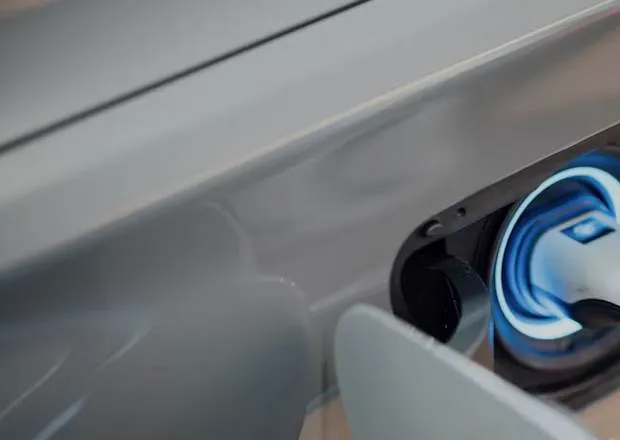
From , electric vehicle batteries, industrial batteries above 2 kWh and light means of transport (LMT) batteries placed on the EU market must carry a battery passport reachable through a 2D code. This is the first settled mandatory application of the Digital Product Passport — an urgent obligation for everyone in the battery chain, and for every other sector the dress rehearsal of the question of how the DPP will actually work.
Why this date is different
While the dates for textiles and furniture still hang on delegated acts, the battery passport's date is written into the regulation itself: . Some industry associations have asked for a postponement, but the Commission has not proposed one, and the sector is preparing. One piece is late: the implementing act that decides who may see the passport's restricted data was legally due in August 2026, and the Commission now expects to publish a draft for feedback in October or November 2026. The Commission launched the EU's central DPP registry on , and its first real load will be battery records, though no passport can be registered successfully yet because the semantic catalogue for batteries is not yet defined.
The Battery Regulation is also a standalone law alongside ESPR — its other duties run on their own clocks: the carbon footprint declaration (Article 7) applies only after the Commission's methodology delegated act and format implementing act enter into force, and neither has been adopted yet; due diligence applies from . The passport arrives as the data layer of that chain of obligations.
Scope: who is in and who is not
Three groups are in scope: electric vehicle batteries, industrial batteries above 2 kWh (storage systems, industrial equipment) and LMT batteries (e-bikes, e-scooters). Out of scope: ordinary portable batteries and automotive starter batteries — the regulation places other duties on them, but not the passport of Article 77.
The critical point: if you export a battery-powered product (an e-bike, say), the passport chain binds you as soon as the battery inside is in scope. Answering "we are not a battery manufacturer" does not take an exporter of battery-powered products out of scope.
What the passport will contain
| Data category | Contents |
|---|---|
| Identity | Manufacturer, model, production site and date, unique battery identifier |
| Composition | Chemical composition, critical raw materials, hazardous substances |
| Carbon footprint | Required under Article 7 only after its methodology and format acts enter into force — not filled in when the passport starts on |
| Circularity | Recycled cobalt, lithium, nickel and lead shares — under Article 8 and its delegated act; not filled in when the passport starts on |
| Performance | Capacity, power, durability, expected lifetime |
| State | State-of-health data updated across the service life |
| Dismantling | Recycling and dismantling information |
Not all of it sits on one plane — consumers see the basics, while accredited inspectors and recyclers reach the deeper layers. That role-based model is the first mandatory application of the general principle of DPP architecture. Another difference is that it is dynamic: state data is updated across the battery's life — the passport is not a document printed at production, but a record that lives with the battery.
The data chain: who supplies what
The difficulty of the battery passport is that the data is not born in one factory: the cell manufacturer carries chemistry and carbon footprint, the module and pack builder carries assembly and performance data, and the finished-product manufacturer carries integration information. Every link owes the next one structured data. The practical consequence: your cell supplier's data capability is the ceiling of your own compliance — supplier selection now needs a data specification next to the technical one.
Case study: an e-bike exporter's autumn of 2026
A representative scenario. A manufacturer near İzmir producing 8.000 e-bikes a year and selling 60 % of them into the Netherlands and Germany runs its scope analysis in September 2026: the batteries fall into the LMT category — binds them.
October: the data specification goes to the cell supplier (Far East): chemical composition, hazardous substances and critical raw materials, needed from . Carbon-footprint and recycled-content data are requested separately, for their own later dates — for an LMT battery the footprint cannot apply before 18 August 2028. The supplier says the composition data will arrive "in mid-2027" — that same week the manufacturer opens pilot talks with a second supplier; data capability is now as hard a screening criterion as the technical specification. November: each individual battery gets its own unique identifier, linked to its model data (Article 77(1)–(3)), and the 2D code is designed to resolve on the manufacturer's own domain. December: the contract with the EU importer is updated — who registers the passport in the registry, and by which date, goes into writing. January: an end-to-end rehearsal on one model: data → passport → registration in the registry's test environment, as soon as the registry accepts registrations. The deadline in February 2027 is an ordinary working day for this manufacturer.
The counterfactual: had the same manufacturer run the analysis in January 2027, it would have discovered the cell supplier's composition-data gap five weeks before the deadline — at that point neither a supplier change nor a data collection makes it in time; the only thing that makes it is the decision to stop the shipment.
A data specification for the supplier: sample clauses
To make the conversation with a cell and module supplier concrete, the clauses that typically belong in the specification: the list of data fields to be delivered (composition, critical raw materials and, for when Articles 7 and 8 apply, carbon footprint together with its methodology and recycled-content shares with evidence); the delivery format (a structured file — not a scanned PDF); the delivery moment (with the production batch, not with the shipment); the update duty (notification if the formulation changes); and a statement of accuracy. Negotiating these clauses today is cheap; negotiating them in February 2027 is impossible — on that day, the data in your hand is the data in your hand.
The order of preparation for a manufacturer
- Scope analysis: what in the range is above 2 kWh or in the LMT/EV category? Who are the cell suppliers behind your battery-powered products?
- Map the data chain: composition and critical-raw-material data come from the cell manufacturer and are needed from ; carbon footprint and recycled-content figures follow later, under Articles 7 and 8 — ask today whether your supplier can produce them; if not, start looking for the alternative today.
- Identifier and carrier: a unique identifier per individual battery, a 2D code on the product. Our guide to the 2D transition covers the printing and durability steps.
- Your counterpart in the EU: who registers the passport in the registry? The operator placing the battery on the EU market — usually your importer. The name belongs in the contract; that registration is not checked at the border, because a battery's registration identifier is not entered in the customs declaration.
- A calendar rehearsal: before February 2027, take at least one model end to end — data collection, passport creation and, as soon as the registry accepts them, a test registration. Making the first attempt on the mandatory date turns the cost of learning into a penalty.
Three edge cases exporters keep asking about
Exporting spare batteries. Batteries that travel into the EU as a spare part rather than inside a finished product are judged against the same scope criteria (EV, industrial above 2 kWh, LMT) — the "spare part" label does not take them out. If you keep a spare-battery catalogue, bring it into the scope analysis.
Shipping without the battery and assembling in the EU. Sending the product without its battery and fitting the battery in the EU does not remove the obligation — the passport follows the battery, and the link that places it on the market carries the responsibility. That arrangement only changes the answer to who registers; provided the answer is written into the contract.
Manufacturing with third-country cells. Cell from the Far East, assembly in Türkiye, sale in the EU — the most common arrangement and the most fragile data chain. Composition data must come from the cell manufacturer before ; carbon footprint data will be needed once Article 7 applies. If the composition data does not arrive, no quality of assembly saves the passport. The specification clauses above are written for exactly this arrangement.
A note for textiles: this is the test bed
What happens in February 2027 — how the registry performs, how market surveillance works in practice, what missing data costs — becomes the template when the textile delegated act is applied. Every lesson the battery chain learns makes your textile checklist more accurate. Whatever your sector, read the news from the battery front in the spring of 2027: you will be watching your own future.
Further reading: What is the ESPR? · What is a Digital Product Passport?
Frequently asked questions
Which batteries need a battery passport?
What information will the battery passport carry?
How does this reach manufacturers outside the EU?
What happens to the passport when a battery is replaced or enters a second life?
Why should textile companies watch this file too?
What are the battery passport requirements?
Sources
- — Corrected: a battery's registration identifier is not entered in the customs declaration, so its passport is not checked at the border; the operator placing the battery on the EU market registers the passport; the registry has launched but cannot accept passport registrations yet. Updated: some industry associations have asked for a postponement, but the Commission has not proposed one; the implementing act on access to the passport's restricted data is late.